
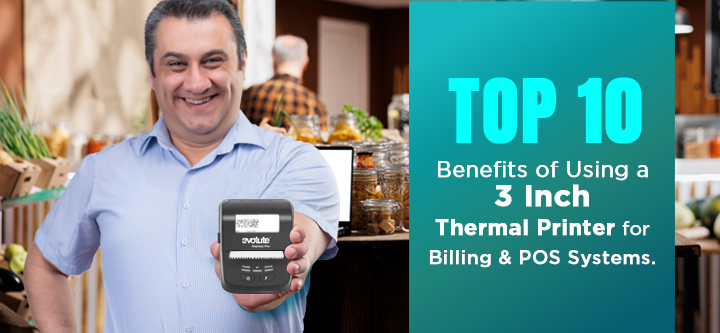
The rapid expansion of digital payments and smart retail infrastructure is transforming billing operations across industries. From supermarkets and pharmacies to restaurants and fintech-enabled kiosks, businesses today require faster, smarter, and more reliable billing systems to handle growing transaction volumes efficiently. This is where the 3 Inch Thermal Printer has become a key component of modern POS ecosystems.
According to the Reserve Bank of India (RBI) Digital Payments Report – February 2026, India recorded a 32.4% year-on-year growth in digital payments, while monthly UPI transactions crossed 24 billion transactions in early 2026. At the same time, a 2026 Statista market outlook estimated that the global POS terminal market will exceed USD 145 billion by 2028, driven by retail automation and smart payment adoption.
As transaction volumes continue increasing, businesses are rapidly upgrading from traditional printing systems to efficient thermal printing solutions that can improve billing speed, reduce operational costs, and support seamless payment experiences.
2 Inch vs 3 Inch Thermal Printer: Why Businesses Are Upgrading
Before the rise of the 3 Inch Thermal Printer, many retailers and mobile billing operators relied heavily on 2-inch thermal printers because of their affordability and compact size.
A 2025 Counterpoint Research study revealed:
- 61% of handheld POS devices in emerging markets initially used 2-inch printers
- Nearly 48% of small retailers preferred compact thermal printers for basic billing operations
- Mobile delivery businesses reduced initial printing costs by approximately 18% using smaller thermal devices
However, as GST billing, QR-code payments, and digital invoicing became standard, businesses started facing operational limitations with 2-inch printers.
| Parameters | 2 Inch Thermal Printer | 3 Inch Thermal Printer |
| Print Width | 48 mm | 72 mm |
| Average Print Speed | 60–80 mm/sec | 120–220 mm/sec |
| GST Billing Support | Limited | Full-format support |
| QR Code Readability | Moderate | High precision |
| Branding Space | Minimal | Sufficient for logos & offers |
A 2026 Retail Technology Trends Survey further found:
- 74% of customers preferred wider and clearer receipts
- Businesses using detailed receipts reported 22% fewer billing disputes
- Retailers printing promotional offers on receipts achieved 17% higher coupon redemption rates
This shift has accelerated the adoption of 3 Inch Thermal Printer solutions across retail, fintech, hospitality, and banking sectors.
Top 10 Benefits of Using a 3 Inch Thermal Printer
1. Faster Billing and Reduced Checkout Time
Checkout speed directly affects customer experience and operational productivity.
According to a 2026 McKinsey retail operations study:
- Faster billing systems improved customer satisfaction by 31%
- Retailers processing over 1,000 daily transactions saved nearly 52 operational hours monthly
- Businesses reducing checkout time by just 20% improved repeat purchases by 18%
Modern 3 Inch Thermal Printer systems print at speeds ranging between 120 mm/sec and 220 mm/sec, making them ideal for high-volume billing environments.
2. Lower Operational Costs
Traditional printers require:
- Ink cartridges
- Toner replacements
- Ribbon maintenance
Thermal printers eliminate these recurring expenses.
A 2025 IDC print infrastructure report estimated:
- Businesses reduced printing-related operational costs by 38–42% annually
- Maintenance-related service calls reduced by 35%
- Businesses saved approximately ₹18,000–₹45,000 per POS unit annually
For enterprises with multiple billing counters, these savings significantly improve profitability.
3. Better Print Quality for GST Billing and QR Codes
Modern receipts now include:
- GST breakdowns
- QR codes
- Transaction IDs
- Loyalty rewards
- Promotional campaigns
A 2026 Zebra Technologies retail study reported:
- 72% of consumers preferred clearly itemized receipts
- Poor print quality increased billing confusion by 27%
- Clear QR-code printing improved scan success rates by 34%
A 3 Inch Thermal Printer ensures sharper, wider, and more readable receipts for better customer experience and compliance.
4. Compact Design with Enterprise-Level Performance
Despite offering wider printing formats, thermal printers remain compact and lightweight.
According to a 2025 POS Hardware Market Analysis:
- Compact POS hardware reduced counter-space usage by 26%
- Businesses improved cashier efficiency by 19%
- Smaller billing setups improved transaction flow by 21%
This makes thermal printers suitable for:
- Retail stores
- Banking kiosks
- Restaurants
- Mobile billing systems
Evolute Fintech Innovations integrates compact thermal printing technology into its fintech ecosystem to support efficient POS infrastructure.
5. Seamless Integration with Fintech Ecosystems
Modern businesses require synchronized billing and payment systems.
A 2026 Deloitte fintech infrastructure survey found:
- 68% of businesses preferred integrated billing ecosystems
- Connected POS systems improved transaction efficiency by 29%
- Businesses with cloud-integrated POS systems reduced reconciliation time by 24%
Modern 3 Inch Thermal Printer solutions support:
- Android POS terminals
- UPI payment devices
- Cloud billing platforms
- ERP integrations
This enables seamless and faster transaction processing.
6. Energy-Efficient and Sustainable Technology
According to the International Energy Agency (IEA) 2026 Retail Energy Report:
- Energy-efficient POS hardware reduced electricity consumption by 15–25% annually
- Businesses adopting low-power peripherals reduced operational electricity costs by 12%
Since thermal printers do not use ink-based mechanisms, they consume less power and generate lower consumable waste.
7. High Reliability During Peak Operations
A 2025 Retail Systems Research survey reported:
- 89% of retailers trusted thermal printers for high-volume reliability
- Billing interruptions during peak hours reduced customer retention by 14%
Thermal printers have fewer moving parts, making them highly durable and suitable for continuous operations.
8. Minimal Maintenance and Better ROI
According to a 2026 global POS hardware lifecycle study:
- Thermal printers required 41% fewer repairs
- Businesses improved hardware ROI by 28% over five years
- Enterprise-grade print heads exceeded 100 km print lifespan
Lower maintenance requirements help businesses minimize downtime and servicing costs.
9. Mobility for Field Transactions
A 2026 Juniper Research report estimated that mobile POS transactions will exceed USD 5.5 trillion globally by 2028.
Modern thermal printers support:
- Bluetooth connectivity
- Wireless printing
- Battery-powered operations
Portable billing solutions improved field transaction efficiency by 33%, especially in logistics, delivery services, and field banking operations.
10. Scalability for Business Expansion
According to Gartner’s 2026 SME Technology Projection:
- 65% of SMEs are expected to modernize POS systems by 2028
- Businesses with scalable billing infrastructure improved operational efficiency by 24%
A 3 Inch Thermal Printer supports:
- Multi-store deployments
- High transaction volumes
- Cloud POS integration
- Centralized billing systems
This makes it a future-ready investment for growing businesses.
Conclusion
As businesses continue adopting digital payments and smart POS systems, the need for faster and more efficient billing solutions is increasing. A 3-inch thermal printer helps businesses improve billing speed, reduce operational costs, and deliver clearer, GST-compliant receipts. Its compact design, reliability, and seamless integration with fintech systems make it an ideal choice for modern retail and payment environments.
By adopting advanced thermal printing solutions, businesses can create a smoother customer experience while building a more scalable and future-ready POS infrastructure.
Key Takeaways
- India’s digital payments grew by 32.4% in 2026, increasing the need for efficient POS systems
- Businesses using thermal printers reduced operational costs by up to 42% annually
- Faster billing systems improved customer satisfaction by 31%
- Clearer receipts reduced billing disputes by 22%
- Energy-efficient POS systems lowered electricity consumption by 25%
- Thermal printers required 41% fewer repairs compared to traditional systems
- Portable billing systems improved field transaction efficiency by 33%
- Integrated POS ecosystems improved transaction efficiency by 29%

