
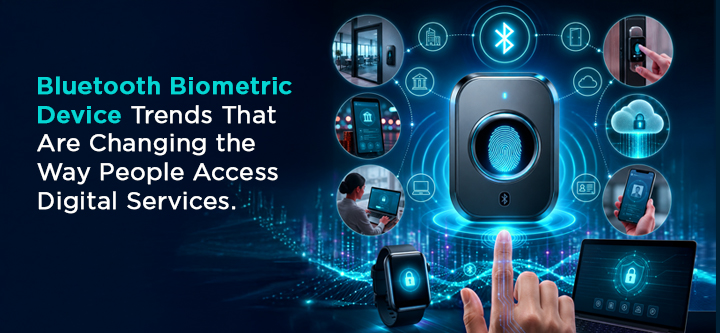
As digital banking, fintech, and government services continue to expand, secure identity verification has become more important than ever. Traditional passwords and OTPs are increasingly being replaced by biometric authentication, offering a faster, safer and more convenient user experience. Among the technologies driving this shift, the Bluetooth Biometric Device is emerging as a critical tool for enabling secure, mobile and real-time authentication.
From Aadhaar-based banking transactions and eKYC verification to financial inclusion initiatives and merchant onboarding, Bluetooth-enabled biometric devices are helping organizations deliver trusted digital services anytime and anywhere.
According to Future Market Insights (2026), the global fingerprint biometrics market is expected to reach USD 29.1 billion in 2026 and grow to USD 78.2 billion by 2036, highlighting the increasing demand for secure identity solutions.
Why Bluetooth Biometric Authentication Is Gaining Momentum
Unlike traditional biometric devices that require wired connectivity, a Bluetooth fingerprint device enables wireless authentication through smartphones, tablets and handheld terminals. This flexibility is especially valuable for field-based banking, digital onboarding, and government service delivery.
Traditional Authentication vs Bluetooth Biometric Authentication
| Traditional Authentication | Bluetooth Biometric Authentication |
| Passwords and PINs | Fingerprint-based authentication |
| Higher fraud risk | Strong identity verification |
| Manual login process | Instant authentication |
| Fixed infrastructure | Mobile and wireless operation |
| User inconvenience | Faster user experience |
As digital ecosystems become increasingly mobile-first, Bluetooth-enabled authentication is becoming a preferred choice across banking, fintech, healthcare and public service sectors.
Bluetooth Biometric Device Trends Reshaping Digital Services in 2026
1. Passwordless Authentication Is Becoming the New Standard
The move toward passwordless access is accelerating globally. According to the FIDO Alliance’s 2026 Passkey Report:
| Passwordless Authentication Statistics (2026) | Percentage |
| Consumers familiar with Passkeys | 90% |
| Users who have enabled Passkeys | 75% |
| Organizations deploying Passkeys | 68% |
| Active Passkeys Worldwide | 5 Billion+ |
These numbers demonstrate a clear shift toward biometric authentication and identity-based security.
As cybersecurity expert Bruce Schneier stated:
“Identity is the new perimeter”
Bluetooth biometric devices are helping organizations strengthen this perimeter while improving user convenience.
2. Financial Inclusion Is Driving Bluetooth Fingerprint Device Adoption
Financial inclusion continues to be a major driver of biometric innovation, particularly in emerging economies such as India.
Banking correspondents, AEPS operators, micro-ATM providers and fintech agents increasingly rely on Bluetooth biometric devices to authenticate customers in remote and underserved regions.
Benefits for Financial Inclusion
| Benefit | Impact |
| Wireless Authentication | Greater mobility |
| Aadhaar-Based Verification | Secure onboarding |
| Real-Time Authentication | Faster transactions |
| Lower Infrastructure Costs | Improved efficiency |
| Rural Accessibility | Expanded service reach |
These capabilities make Bluetooth biometrics a powerful enabler of last-mile banking and digital inclusion.
3. AI-Powered Security and Anti-Spoofing Technologies
As biometric adoption increases, security remains a top priority.
Modern Bluetooth biometric devices now incorporate advanced technologies such as AI-driven fraud detection, liveness detection, and fake fingerprint prevention. UIDAI’s enhanced Fake Finger Detection initiatives and L1-compliant biometric standards have further strengthened security within Aadhaar authentication ecosystems.
Advanced Security Features
| Security Feature | Purpose |
| AI Fraud Detection | Identifies suspicious activity |
| Liveness Detection | Verifies genuine users |
| Fake Finger Detection | Prevents spoofing attacks |
| Encrypted Data Storage | Protects biometric information |
These innovations help organizations reduce fraud while maintaining trust in digital transactions.
4. Mobile-First Banking Is Accelerating Bluetooth Fingerprint Scanner Adoption
The growing popularity of mobile banking and digital financial services is increasing demand for the bluetooth fingerprint scanner.
According to Polaris Market Research (2026), the global mobile biometrics market is projected to reach USD 63.5 billion in 2026, driven largely by banking and financial services.
Mobile Biometrics Market Snapshot
| Metric | 2026 |
| Market Size | USD 63.5 Billion |
| Fingerprint Recognition Share | 41.25% |
| Forecast CAGR | 19.88% |
For banks and fintech providers, Bluetooth biometric authentication enables secure customer onboarding, transaction approvals, and identity verification without requiring fixed infrastructure.
5. Multi-Modal Biometrics Is the Future
While fingerprint authentication remains dominant, organizations are increasingly adopting multi-modal biometric systems that combine multiple verification methods.
Emerging Biometric Authentication Methods
| Authentication Method | Adoption Trend |
| Fingerprint Recognition | High |
| Facial Recognition | Very High |
| Iris Recognition | Growing |
| Voice Biometrics | Emerging |
Future Bluetooth biometric devices are expected to support multiple authentication methods, enhancing both security and user experience.
How Evolute Fintech Innovations Supports This Transformation
As digital finance ecosystems evolve, Evolute Fintech Innovations continues to support secure and inclusive digital service delivery through advanced fintech and biometric technologies.
Its portfolio includes solutions that enable:
| Solution Area | Business Benefit |
| Biometric Authentication | Trusted identity verification |
| AEPS Enablement | Financial inclusion |
| Micro-ATM Solutions | Last-mile banking access |
| Payment Acceptance Infrastructure | Secure transactions |
| Digital Banking Technologies | Enhanced customer experience |
These solutions help banks, fintech companies, and government agencies deliver reliable, secure, and scalable digital services.
Conclusion
The rapid growth of digital banking and fintech is making biometric authentication a necessity rather than an option. Bluetooth-enabled biometric solutions provide the mobility, security, and convenience required to support modern digital services.
Key Takeaways
- The global fingerprint biometrics market is expected to reach USD 29.1 billion in 2026.
- More than 5 billion passkeys are already active worldwide.
- Bluetooth biometric devices are accelerating financial inclusion and digital onboarding.
- AI-powered anti-spoofing technologies are improving authentication security.
- Mobile-first banking is driving demand for Bluetooth-enabled biometric solutions.
- Evolute Fintech Innovations is helping organizations build secure and future-ready digital identity ecosystems.
As organizations continue to prioritize secure access and seamless user experiences, the Bluetooth Biometric Device will play a central role in shaping the future of digital services

