
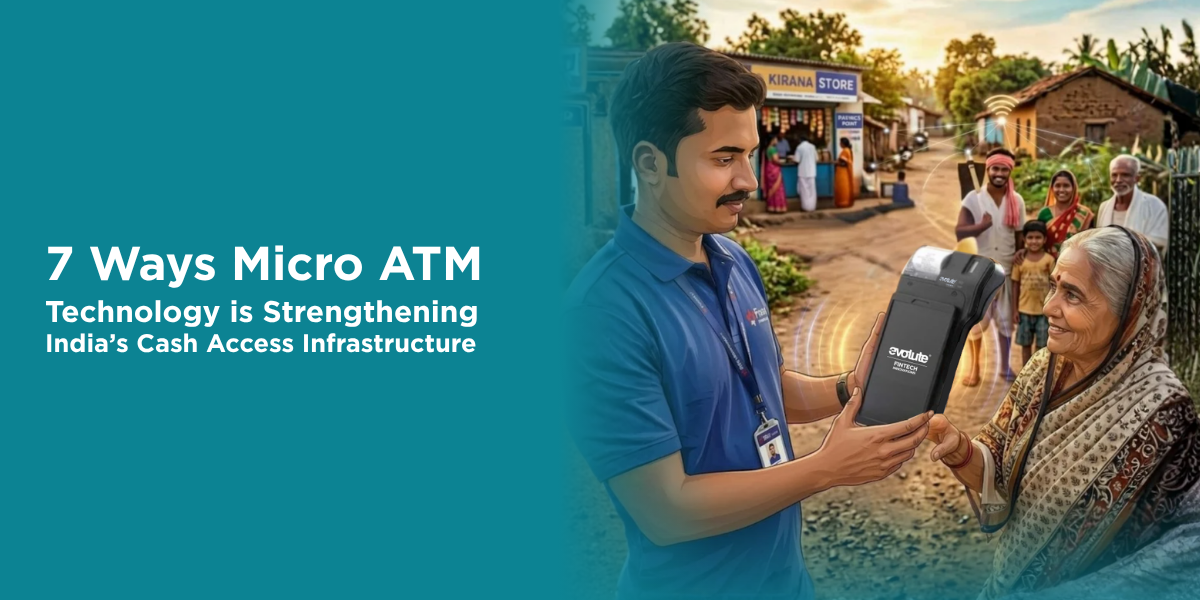
Introduction
India’s payments ecosystem has evolved rapidly with the rise of UPI and digital banking, yet cash continues to remain an essential component of the country’s financial system. According to the Reserve Bank of India (RBI) Payments Vision 2025 report, currency in circulation crossed ₹36.9 lakh crore in late 2025, reflecting the continued reliance on physical cash for everyday transactions, especially in rural and semi-urban areas. While digital adoption is expanding, access to reliable cash withdrawal points remains a major challenge across thousands of villages.
This is where the Micro ATM Machine ecosystem is playing a transformative role. By enabling Aadhaar authentication and interoperable banking services through Business Correspondents (BCs), micro ATMs allow people to withdraw cash, check balances, and access basic banking services without visiting a bank branch.
With financial inclusion initiatives such as Jan Dhan Yojana and Aadhaar Enabled Payment System (AePS) expanding rapidly, micro ATM infrastructure is becoming a key component of India’s decentralized banking network.
The Growing Importance of Micro ATM Machine Technology in India’s Cash Access Infrastructure
India’s financial ecosystem is increasingly supported by fintech-enabled hardware infrastructure that extends banking services beyond traditional channels. Fintech companies are developing secure biometric devices, cloud-connected payment platforms, and interoperable transaction technologies that allow Business Correspondents, merchants, banks, and financial institutions to deliver financial services in remote regions.
Solutions developed by Evolute Fintech Innovations support this ecosystem by enabling secure financial transaction devices designed for large-scale deployments across banking networks. These fintech-driven systems help financial institutions deploy Micro ATM Machine networks that strengthen last-mile banking access while supporting India’s broader financial inclusion strategy.
With this context, let us explore 7 ways Micro ATM Machine technology is strengthening India’s cash access infrastructure.
1. Bridging the Rural Banking Infrastructure Gap
India still faces a significant rural banking infrastructure gap. According to the World Bank Global Findex 2025 update, nearly 78% of Indian adults now have bank accounts, largely due to financial inclusion initiatives such as Jan Dhan Yojana. However, many account holders still lack convenient access to nearby banking facilities.
Micro ATM devices help address this challenge by enabling Business Correspondents to deliver banking services directly within villages and remote communities. Customers can withdraw cash or access basic banking services locally instead of traveling long distances to reach a bank branch.
A 2026 NABARD financial inclusion survey estimates that India now has over 1.4 million Business Correspondents, many of whom rely on micro ATM devices to serve rural populations efficiently.
2. Strengthening Aadhaar Enabled Payment System (AePS)
Micro ATM Machine Integration with Aadhaar-Based Transactions
The success of micro ATM networks is closely tied to the Aadhaar Enabled Payment System (AePS). This system allows individuals to perform banking transactions using biometric authentication linked to their Aadhaar number.
According to NPCI data released in January 2026, AePS processed transactions worth over ₹1.9 lakh crore during FY 2025, with rural cash withdrawals forming a major share of these transactions.
Micro ATM devices make this possible by enabling services such as:
- Aadhaar-based cash withdrawals
- Balance enquiries
- Mini statements
- Fund transfers between Aadhaar-linked accounts
Biometric authentication ensures secure transactions even for individuals who may not possess debit cards or smartphones.
3. Expanding Cash Access Beyond Traditional ATMs
Traditional ATMs require substantial infrastructure investments, including electricity supply, connectivity, and security monitoring. Deploying these machines in remote locations can therefore be economically challenging.
Micro ATM devices overcome these barriers through portable, battery-powered systems that operate using mobile network connectivity. Business Correspondents can carry these devices to deliver banking services anywhere.
According to the RBI Banking Infrastructure Report (2025), India currently has around 2.6 lakh traditional ATMs, which is insufficient to serve the vast rural population. Micro ATM networks help bridge this gap by creating decentralized cash access points across villages and semi-urban areas.
4. Empowering Business Correspondent Networks
Business Correspondents have become a cornerstone of India’s financial inclusion ecosystem. With micro ATM devices, BC agents can provide secure banking services to customers in underserved locations.
These devices enable BC networks to offer services such as:
- Real-time banking transactions
- Secure biometric authentication
- Instant balance enquiries and withdrawals
According to the Ministry of Finance report (March 2025), Business Correspondents now facilitate over 60% of rural banking transactions, highlighting their importance in extending financial services beyond bank branches.
5. Supporting Government Welfare Distribution
India operates one of the world’s largest welfare distribution ecosystems through Direct Benefit Transfer (DBT) schemes.
According to the DBT Mission Dashboard (2025), government subsidies worth ₹6.9 lakh crore were transferred directly into beneficiary accounts, improving transparency and reducing leakage.
Micro ATM devices allow beneficiaries to withdraw these funds easily using biometric authentication, eliminating the need to travel long distances to banks. This ensures faster access to financial support for rural households and daily wage earners.
6. Enabling Interoperable Banking Across Financial Networks
One of the major strengths of micro ATM technology is interoperability. Through NPCI frameworks such as AePS and National Financial Switch (NFS), customers can withdraw money from any bank account using a single device.
This means a customer from one bank can withdraw cash from a Business Correspondent representing another bank. Such interoperability significantly enhances financial accessibility in regions with limited banking infrastructure.
This capability is an important pillar supporting India’s Digital Public Infrastructure (DPI) ecosystem.
7. Accelerating Fintech-Led Financial Infrastructure Development
Micro ATM technology represents an important convergence between fintech innovation and financial inclusion. Modern devices integrate biometric authentication, smart card readers, and secure encryption systems that support high-volume financial transactions.
Companies such as Evolute Fintech Innovations contribute to this ecosystem by developing payment devices and fintech infrastructure designed for scalable deployments across banking networks. These innovations help financial institutions strengthen cash access infrastructure while enabling secure financial services delivery across distributed locations.
How Fintech is Powering the Growth of Micro ATM Machine Networks in India
India’s financial infrastructure is increasingly supported by fintech-driven hardware and payment technologies that enable banking services beyond traditional branches. Fintech companies are developing secure biometric devices, cloud-enabled transaction platforms, and interoperable payment systems that allow Business Correspondents and merchants to provide banking services in remote regions.
Solutions developed by Evolute Fintech Innovations support this ecosystem through advanced payment devices and fintech infrastructure designed for high-volume financial transactions. These innovations enable banks, NBFCs, and financial institutions to deploy Micro ATM Machine networks that improve last-mile banking access while supporting India’s broader financial inclusion strategy.
Conclusion
Micro ATM technology has become a crucial component of India’s evolving financial infrastructure. By enabling decentralized banking services, these devices are helping bridge the gap between traditional banking networks and underserved communities.
Key takeaways:
- Micro ATM networks bridge the rural banking infrastructure gap
- They enable secure biometric banking transactions through AePS
- Business Correspondents use them to deliver last-mile financial services
- They support efficient distribution of government welfare benefits
- Interoperability enables customers to access funds from any bank
- Fintech innovations are strengthening micro ATM infrastructure
As India continues to advance toward a more inclusive financial ecosystem, the Micro ATM Machine will remain a critical fintech-driven tool enabling reliable cash access for millions of citizens across the country.

